When drivers compare a maintenance free deep cycle battery with a traditional low maintenance option, the focus often centers on daily care, reliability, and long-term usability. At Aokly, we understand that choosing the right car battery is not only about price but also about how the battery fits real driving conditions. In this article, we explain the practical differences between maintenance free and low maintenance car batteries, and how these differences influence vehicle performance and routine servicing.
Structural Differences and Daily Maintenance
A traditional low maintenance battery usually requires periodic inspection of electrolyte levels. In certain conditions, users may need to refill distilled water to maintain proper chemical balance. This means more frequent checks and a higher possibility of neglect affecting performance.
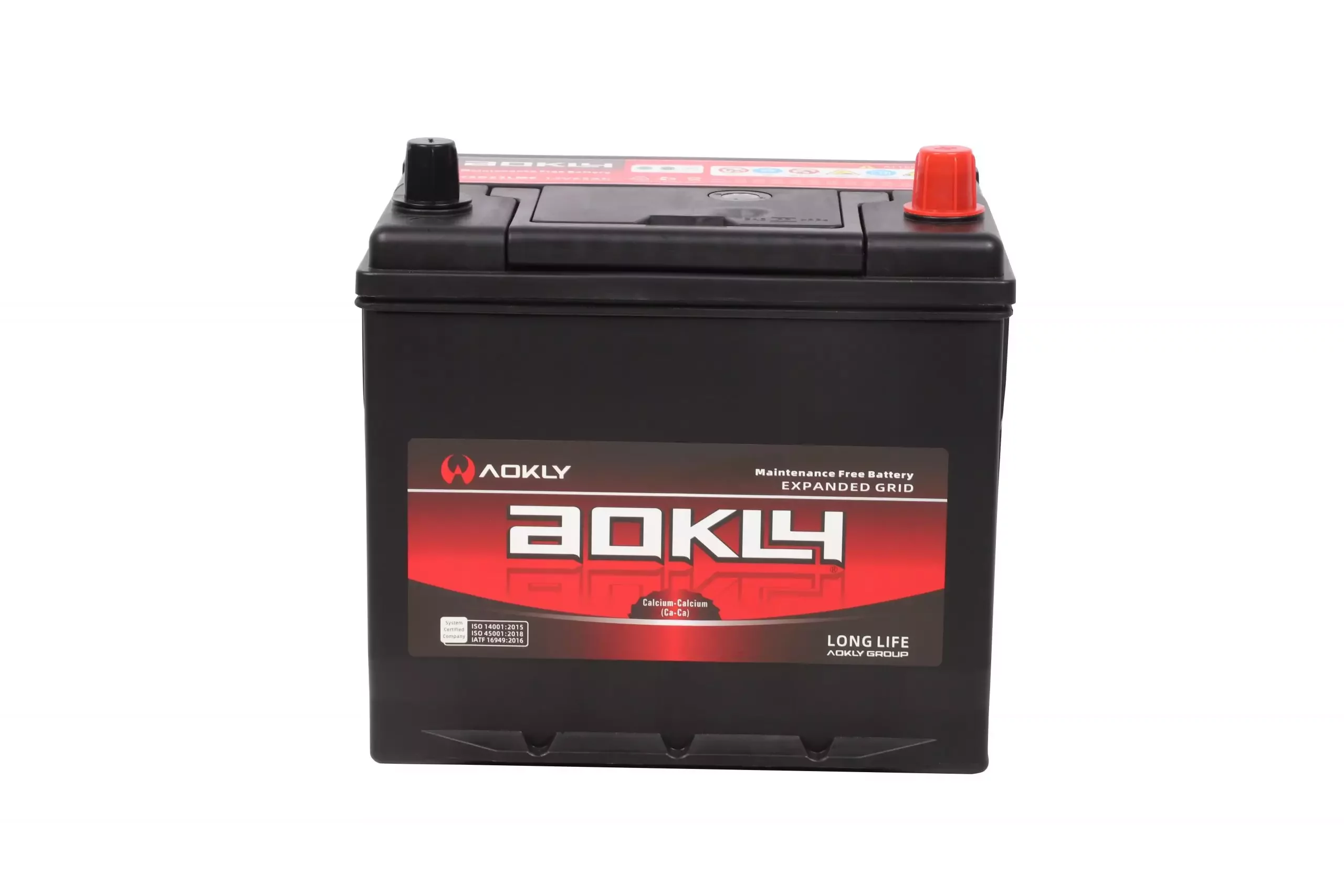
By contrast, a maintenance free deep cycle battery is designed with a sealed structure and optimized internal formula to reduce water loss. In our production process, we use a strong polypropylene container, advanced lead calcium alloy, and an active material formula that supports acid and vibration resistance. This structure allows drivers to install the battery and use it directly without refilling water during normal operation. For everyday drivers, this reduces routine servicing steps while maintaining stable output under standard vehicle charging systems.
Performance Stability and Vehicle Compatibility
Performance differences also appear in starting power and resistance to vibration. A low maintenance battery can deliver reliable starting power, but its water consumption and plate design may influence long-term stability in demanding environments.
At Aokly, our 75D23LMF (12V 65Ah) model reflects the practical design of a maintenance free deep cycle battery for passenger vehicles. With lower water loss and improved cold cranking capacity, it supports vehicles operating under 14.2–14.4V charging systems. During use, we recommend keeping the battery clean, ensuring firm terminal connections, and fastening it securely to minimize vibration impact. For recharging, constant current charging below 0.1C or constant voltage charging between 14.2 and 14.6V is suitable. These guidelines help users understand how to maintain performance without complicated procedures.
Storage, Longevity, and Real-World Application
Storage and handling further distinguish the two battery types. Traditional low maintenance batteries often require more frequent inspection during storage because electrolyte evaporation can occur over time.
A maintenance free deep cycle battery, when stored in a cool and dry place away from direct sunlight, maintains stability for extended periods. However, if storage exceeds six months, recharging before installation is recommended. These instructions ensure that performance remains consistent when the battery enters service. In daily driving scenarios, this simplified care approach supports drivers who prefer reduced maintenance involvement without sacrificing compatibility with standard automotive electrical systems.
Conclusion: Practical Choice Based on Usage Needs
The comparison between a maintenance free car battery and a traditional low maintenance type ultimately depends on how much routine care a driver is prepared to manage. A maintenance free deep cycle battery offers simplified servicing, controlled water loss, and stable compatibility with modern charging systems, while low maintenance batteries require periodic electrolyte checks. At Aokly, we design solutions such as the 75D23LMF (12V 65Ah) to meet real vehicle requirements through balanced structure and clear usage guidance. Understanding these differences helps drivers make informed decisions based on operating habits, storage conditions, and vehicle electrical specifications.