When discussing why a maintenance free battery may fail, we believe it is important to start with how this type of lead acid battery is designed to work. At Aokly, we manufacture sealed automotive batteries that are ready to install and do not require water refilling during normal vehicle use. While this design reduces routine service, failure can still occur if charging systems, storage conditions, or usage habits are not properly managed. Understanding these factors helps drivers extend battery life and maintain stable vehicle performance.
Common Causes Behind Maintenance Free Battery Failure
A maintenance free battery is built with a sealed structure, advanced lead calcium alloy, and a controlled electrolyte system. However, improper charging remains one of the most common reasons for failure. If a vehicle’s charging system exceeds 14.6V or operates below 14.2V for long periods, internal plate degradation or sulfation may develop. The battery is suitable for vehicles with a 14.2–14.4V charging system, and consistent voltage stability is essential.
Another factor involves storage and environment. Even though a maintenance free battery does not require water addition, it must be stored in a cool, dry place and kept away from direct sunlight. If stored for more than six months, it should be recharged before sale or installation. Long-term low charge levels can lead to irreversible sulfation, which reduces cranking performance. In daily use, keeping terminals clean and ensuring tight connections also prevents unnecessary internal resistance and heat buildup.
Structural Design and Application Considerations
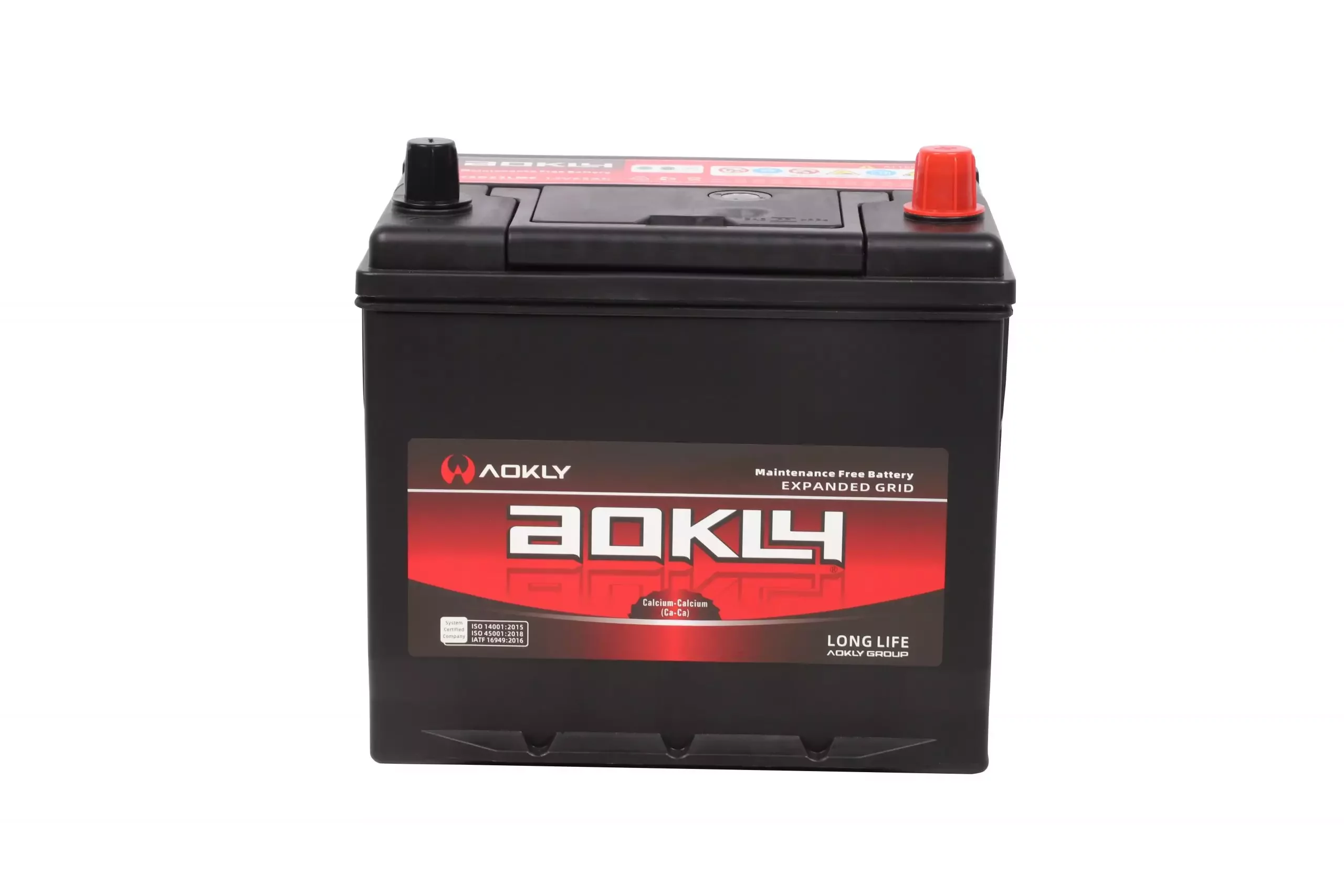
At Aokly, we apply a strong polypropylene container, advanced lead calcium alloy grids, and an optimized active material formula. This design provides lower water loss, improved acid retention, and higher cold cranking capacity. However, even with these improvements, excessive vibration, repeated deep discharge, or incompatible vehicle charging systems may shorten service life. A maintenance free battery is designed primarily for starting applications rather than deep-cycle energy storage.
For example, our NS60MF(55B24RMF) 12V45Ah model is ready to use in a car immediately after installation. It supports constant current charging below 0.1C or constant voltage charging between 14.2V and 14.6V. During use, the battery should remain securely fastened to reduce vibration stress. These operational guidelines directly influence reliability and help prevent premature failure.
Usage Habits and Charging Practices
Failure is often related to driving patterns. Short-distance driving without sufficient alternator charging time can prevent a maintenance free battery from reaching full charge. Over time, partial state-of-charge operation accelerates sulfation. Similarly, adding external electrical accessories without evaluating load demand may strain the starting battery beyond its intended purpose.
We recommend routine inspection of vehicle charging voltage, periodic terminal cleaning, and ensuring secure mounting. Although drivers never need to refill water, proper external maintenance remains essential. When charged correctly and installed in compatible vehicles, sealed lead acid batteries offer stable performance and a simplified ownership experience.
Conclusion: Understanding and Preventing Failure
In conclusion, a maintenance free battery fails primarily due to improper charging voltage, unsuitable storage, vibration stress, or inconsistent driving patterns rather than the absence of water refilling. At Aokly, we design products such as the NS60MF(55B24RMF) 12V45Ah to operate reliably within a 14.2–14.4V system when charged using recommended methods. By understanding how charging systems, storage conditions, and daily usage influence performance, drivers can reduce the risk of premature battery failure and maintain dependable starting power.