At Aokly, we focus on practical engineering improvements that make modern vehicles more reliable and easier to maintain. The development of the lead acid battery maintenance free design reflects this direction. Instead of requiring regular water refilling and frequent inspection, this type of battery is factory sealed and ready for direct installation in a car. In this article, we explain the key design innovations behind maintenance free structures and how these improvements support daily vehicle operation in a clear and measurable way.
Advanced Alloy and Plate Structure
One important innovation in the lead acid battery maintenance free system is the use of advanced lead-calcium alloy grids. Compared with traditional alloys, lead-calcium technology reduces water loss during charging and helps maintain stable internal chemistry. Combined with optimized active material formulas, the plates achieve stronger corrosion resistance and better durability under vibration.
In our design practice at Aokly, we apply strong polypropylene containers and reinforced internal plate structures. This material improves acid resistance while enhancing vibration protection, which is essential for vehicles operating on uneven roads. The optimized plate layout also contributes to higher cold cranking capacity, supporting engine start performance in low-temperature conditions. These structural improvements are practical examples of how the lead acid battery maintenance free concept evolves through materials and engineering refinement rather than marketing claims.
Sealed Construction and Operational Convenience
Another key innovation in the lead acid battery maintenance free approach is sealed construction. For a new battery, it is ready to be used in a car immediately, and during usage there is no need to refill water. This reduces maintenance steps and lowers the risk of electrolyte contamination.
Proper usage still matters. During operation, users should always keep the battery clean, ensure that terminals are firmly connected, and fasten the battery securely inside the vehicle. Recharge methods also follow clear guidelines: constant current charging below 0.1C or constant voltage charging at 14.2–14.6V. The battery is suitable for vehicles with a 14.2–14.4V charging system. For storage, units should be kept in a cool and dry place, away from direct sunlight, and batteries stored for over half a year should be recharged before sale or installation. These practical instructions show that lead acid battery maintenance free does not mean zero care, but simplified and controlled maintenance.
Practical Application Example and Conclusion
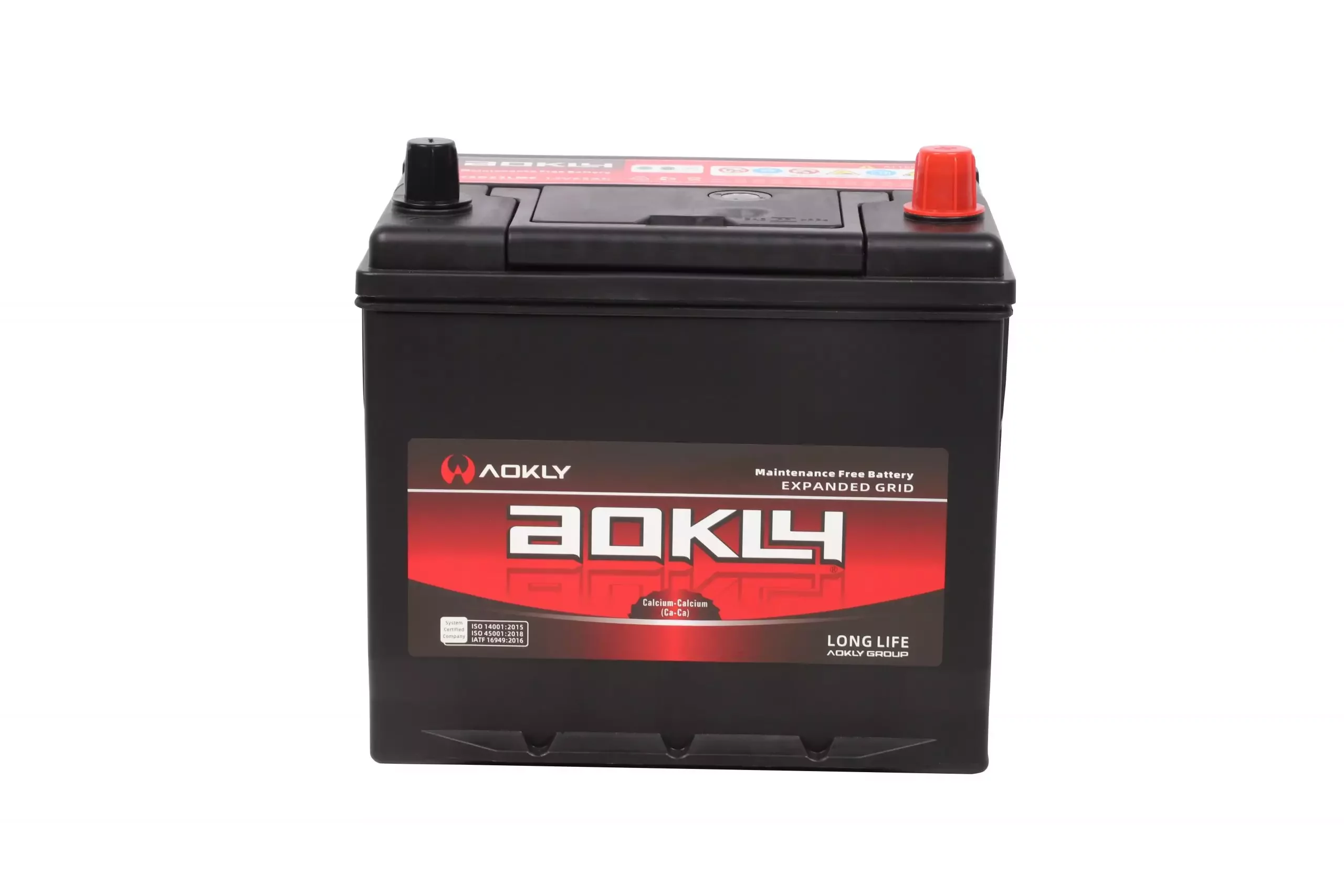
A practical example is our N50MF (48D26RMF) 12V 50AH model. This product reflects the structural features discussed above, including a sealed design, reinforced container, and plate technology supporting stable starting performance. Within Aokly, we view product design as a balance between durability, safety, and compatibility with real vehicle charging systems. The N50MF (48D26RMF) 12V 50AH demonstrates how the lead acid battery maintenance free structure supports daily driving needs without adding operational complexity.
Conclusion
Key design innovations in maintenance free batteries center on alloy optimization, sealed construction, plate durability, and controlled charging compatibility. Through engineering refinement rather than exaggerated claims, Aokly continues to develop the lead acid battery maintenance free platform to improve stability, reduce routine servicing requirements, and ensure compatibility with common automotive charging systems. By understanding these structural principles, users can better evaluate battery performance and apply correct usage and storage practices in real-world conditions.