In modern digital infrastructure, uptime is not simply a technical metric; it defines business continuity. At Aokly, we understand how critical UPS battery backup systems are in data centers where even a few seconds of power interruption can disrupt operations. A properly configured UPS battery backup protects servers, networking equipment, and storage systems from voltage instability and sudden outages. By focusing on battery reliability, discharge stability, and maintenance efficiency, we support data center operators who aim to extend equipment life while maintaining consistent performance.
Why UPS Battery Backup Matters for Data Center Stability
Data centers operate around the clock, which makes power quality management a constant priority. A well-designed UPS battery backup absorbs voltage fluctuations and provides immediate support during grid failures. This bridge period allows generators to start or controlled shutdown procedures to begin without damaging hardware.
For facility engineers, battery characteristics such as internal resistance, self-discharge rate, and temperature tolerance directly influence system stability. Lower internal resistance supports high-rate discharge, which is essential when racks demand instant current during unexpected power loss. At our company, we pay close attention to compact internal structures and improved AGM separators that help maintain consistent electrical performance. These design details reduce energy loss within the battery pack and contribute to predictable runtime in mission-critical environments.
Key Battery Features that Improve Uptime
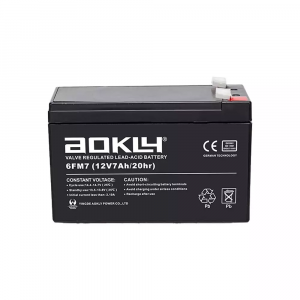
When selecting batteries for data centers, long service life and stable performance under variable loads are essential. Our 6-FM-7 model is developed for backup applications requiring dependable output. It offers a nominal capacity range of 4Ah–20Ah and nominal voltage options of 6V or 12V, supporting flexible system design. With a design life of five years at 25℃ and self-discharge controlled at ≤3% per month, the unit supports planned maintenance cycles rather than reactive replacements.
The structure uses shorter internal connectors between cells to reduce internal resistance. High sealing reaction efficiency of ≥99% enhances safety and operational stability. Operating temperature ranges from -20℃ to 60℃, allowing the system to function across varied facility conditions. The casing is manufactured from high-strength ABS (UL94-HB, with UL94-V0 optional), and the double sealing technique—mechanical plus epoxy—improves terminal protection. These structural considerations help a UPS battery backup system respond effectively during high-rate discharge events.
Practical Strategies to Maximize UPS Battery Backup Performance
Maximizing uptime requires more than installing equipment. Regular capacity testing, temperature monitoring, and correct float voltage settings ensure that a UPS battery backup performs as expected over time. Data center managers should maintain adequate ventilation, verify terminal torque, and schedule routine inspections to prevent gradual degradation.
At Aokly, we approach product development with real operational scenarios in mind. By aligning battery structure, separator technology, and plate design with the electrical demands of backup systems, we aim to support long-term reliability without unnecessary complexity. The result is a balanced solution that integrates smoothly into existing infrastructure while meeting evolving uptime expectations.
Conclusion: Building Resilient Data Centers with Reliable Backup Power
Data centers depend on stable power to protect data integrity and operational continuity. Through thoughtful battery selection, proper maintenance, and system-level planning, organizations can significantly improve uptime. A dependable UPS battery backup plays a central role in that strategy. At Aokly, we focus on practical engineering details that help data centers maintain continuity under demanding conditions. By combining informed system design with consistent battery performance, facilities can reduce risk and operate with greater confidence in their power protection strategy.