Modern vehicles place far greater demands on the automotive battery than older cars. Start-stop operation can restart the engine many times during one trip, while ADAS, infotainment, climate controls, safety systems, and other electronics still need stable power when the engine is off. Vehicles with regenerative braking also require a battery that can quickly accept recovered energy.
This change has accelerated the move from conventional flooded starter batteries to enhanced flooded batteries (EFB) and absorbent glass mat (AGM) batteries. Both are advanced lead-acid technologies, but AGM generally provides stronger charge acceptance, cycling durability, cold-start performance, and resistance to vibration and leakage. It is therefore commonly selected for more demanding vehicle platforms.
For importers, wholesalers, and automotive distributors, the AGM vs EFB battery decision affects more than performance. It also influences vehicle coverage, inventory value, warranty exposure, and customer satisfaction.
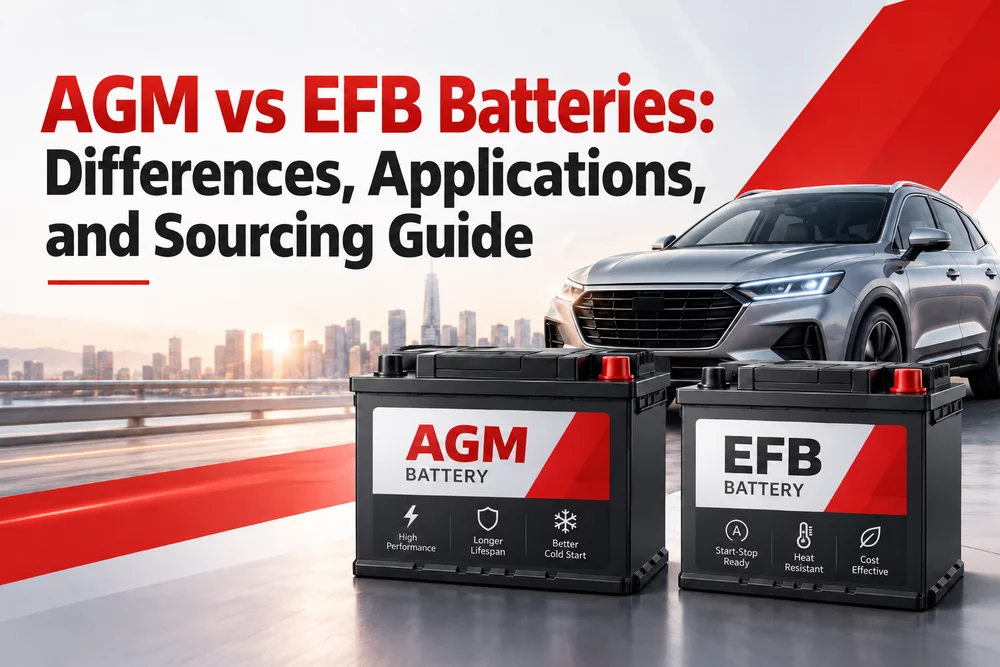
AGM vs EFB Battery: Key Differences
AGM and EFB batteries are both designed to withstand more frequent cycling than a conventional starting, lighting, and ignition battery. However, they use different internal structures and target different duty levels.
| Comparison point | AGM battery | EFB battery |
| Full name | Absorbent Glass Mat | Enhanced Flooded Battery |
| Construction | Electrolyte is absorbed and held in fiberglass mats; normally a valve-regulated design | Liquid electrolyte remains free-flowing, but plates, separators, and active materials are enhanced |
| Typical duty | Advanced start-stop, regenerative braking, high electrical loads | Basic start-stop and moderate electrical loads |
| Charge acceptance | Higher; well suited to frequent energy recovery | Better than a conventional flooded battery, but generally below AGM |
| Cycle durability | Typically the stronger option for repeated partial-state-of-charge cycling | Higher than a conventional flooded starter battery |
| Cold-start performance | Strong, depending on the battery’s CCA rating | Good, depending on the model and CCA rating |
| Vibration and leak resistance | Strong because the electrolyte is immobilized | Improved durability, but still a flooded design |
| Typical vehicles | Premium passenger cars, SUVs, advanced start-stop vehicles, and some hybrid low-voltage systems | Compact and mid-size cars with entry-level start-stop systems |
| Cost | Higher initial cost | More economical |
| Replacement rule | Do not downgrade an OE-specified AGM to EFB | Replace like for like unless the vehicle manufacturer permits an AGM upgrade |
EFB batteries offer a cost-effective solution for vehicles with basic start-stop systems and moderate electrical demands. For advanced start-stop systems, regenerative braking, or higher onboard power requirements, AGM batteries are generally the more suitable choice. Their internal design helps explain why they perform well in these demanding applications.
What Is an Absorbent Glass Mat (AGM) Battery?
An AGM battery is a valve-regulated lead-acid battery (VRLA). Its electrolyte is absorbed and retained in porous glass fiber separators positioned between the positive and negative plates. This structure keeps the electrolyte immobilized and helps maintain consistent contact between the electrolyte and active materials.
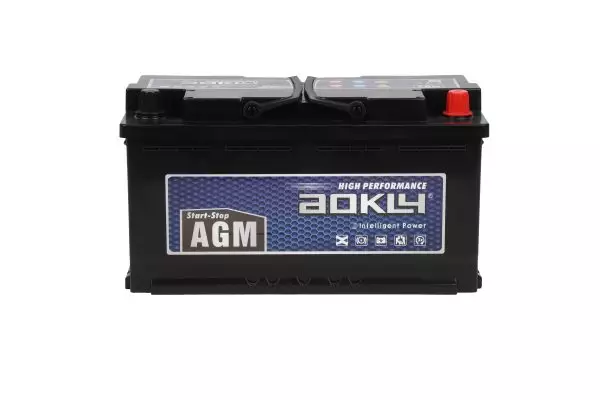
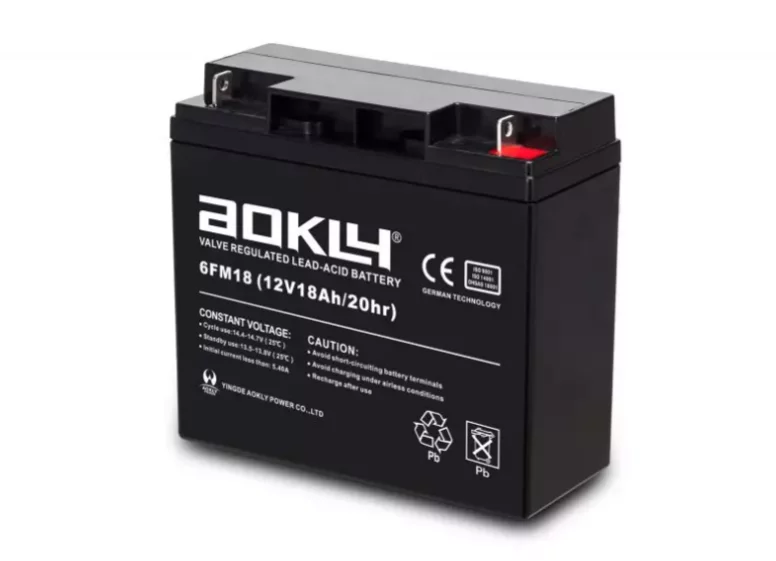
Picture shown: Aokly AGM start-stop battery AGML5
Key Advantages of AGM Batteries
1. Strong Starting Power
AGM batteries have low internal resistance, supported by close contact between the plates and electrolyte-soaked glass mats. This allows them to deliver high currents quickly, helping the starter motor crank the engine reliably. This advantage is particularly useful for cold-weather starting and vehicles with demanding engine-starting requirements, provided the battery meets the vehicle’s specified cold cranking amps (CCA).
2. Rapid Charge Recovery
The glass mat structure maintains close contact between the electrolyte and plates, helping reduce internal resistance and support efficient charge acceptance. An AGM start-stop battery can therefore replenish energy after repeated engine restarts and absorb short bursts of recovered braking energy. These capabilities are especially valuable in advanced start-stop vehicles and stop-and-go urban driving.
3. Higher Cycling Durability
AGM batteries hold their plates and glass mat separators under controlled compression. This mechanical support helps limit active-material shedding during repeated charging and discharging, preserving performance over time. The resulting cycling durability makes AGM well suited to frequent start-stop operation and vehicles that repeatedly power accessories while the engine is off, rather than simply delivering one initial start.
4. Reliable Power for Onboard Electronics
Low internal resistance and durable plate construction help AGM batteries supply demanding electrical loads while tolerating repeated cycling. This combination supports infotainment, comfort features, and other onboard electronics during engine-off periods, while retaining sufficient energy for restarting. It is particularly useful in premium passenger cars and heavily equipped SUVs, where accessory demand places additional pressure on the 12V battery.
5. Improved Vibration and Leak Resistance
Tightly compressed plate packs help prevent internal movement, while the fiberglass mats hold the electrolyte instead of leaving it free to slosh inside the case. These features improve resistance to vibration damage and reduce leakage risk. They are valuable for SUVs and vehicles regularly driven on uneven roads, although installation angle and mounting must still follow manufacturer instructions.
6. No Routine Water Refilling
AGM batteries use a valve-regulated design that allows oxygen generated during normal charging to recombine internally, substantially reducing water loss. This eliminates routine water topping-up and simplifies maintenance, particularly when the battery is difficult to access. However, maintenance-free does not mean maintenance-proof: correct charging, secure connections, and periodic condition checks remain important for dependable automotive service.
Where Are AGM Batteries Used?
AGM is particularly suitable for start-stop vehicles with recuperation, premium equipment, and sophisticated electrical accessories. Typical applications include luxury cars, SUVs, heavily equipped passenger vehicles, and advanced start-stop platforms.
AGM can also serve as a 12V starter or auxiliary battery in certain hybrid, mild-hybrid, and electric vehicle architectures. However, an AGM start-stop battery is not a replacement for a 48V mild-hybrid battery or a high-voltage traction battery. Buyers must confirm the exact low-voltage role and OE fitment.
How to Choose and Source AGM Automotive Batteries
A successful AGM sourcing program begins with vehicle demand and ends with validated, repeatable production. The following checks help distributors reduce fitment problems, slow-moving inventory, and warranty risk.
1. Match the Vehicle Segment
Start by identifying the vehicle segments in your market.
- Start-stop passenger cars: Determine whether the vehicles require EFB or AGM based on the original equipment specification.
- Luxury vehicles: Check for AGM requirements associated with advanced energy management and extensive electrical equipment.
- SUVs: Consider engine requirements, accessory loads, climate conditions, and the specified battery type.
- Mild hybrids: Verify the battery’s exact function, voltage system, and OEM requirements before selecting a model.
The vehicle parc should guide product selection. A European premium-car market may require a different AGM size mix from an Asian replacement market or a region dominated by compact vehicles.
2. Confirm Technical Specifications
Do not source by capacity alone. Confirm:
- Nominal voltage and capacity in ampere-hours
- Cold cranking amps and the applicable EN, SAE, or other test method
- Reserve capacity, where required
- Length, width, height, and total height
- Terminal type, polarity, and terminal layout
- Bottom hold-down and mounting configuration
- Vibration resistance and installation position
- Venting requirements
- OE reference and vehicle fitment coverage
- Battery management system registration requirements
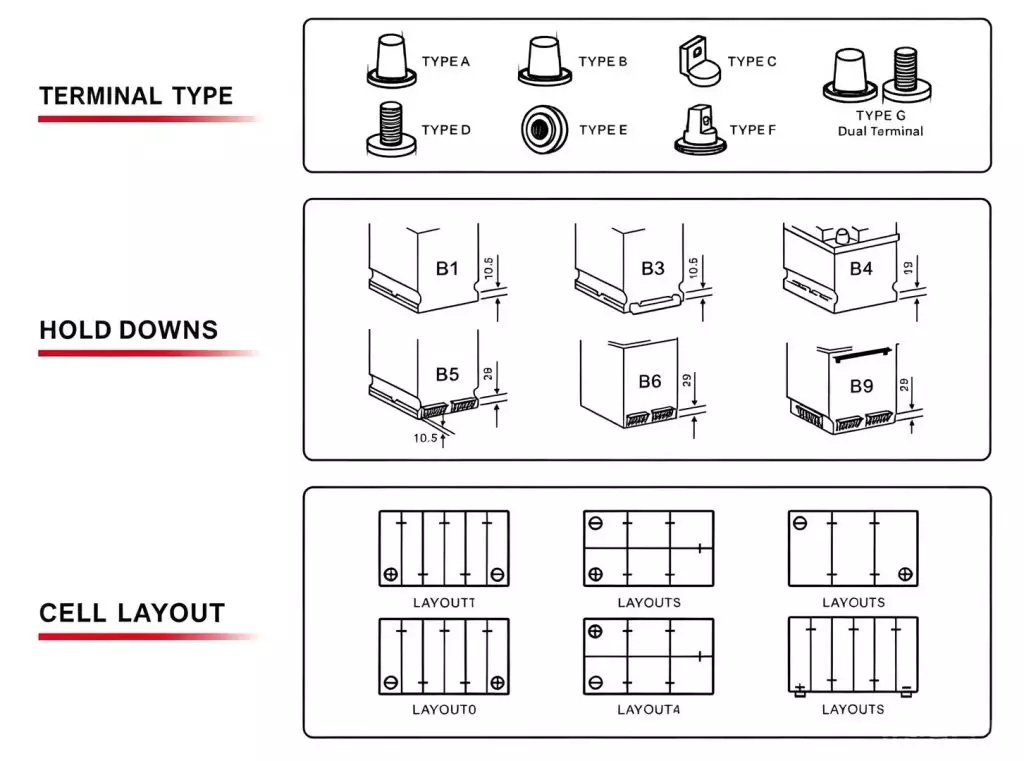
For European start-stop applications, EN 50342-6 covers lead-acid batteries for micro-cycle applications, including vehicles capable of recovering braking energy. Ask suppliers to identify the exact standard edition, test method, and performance level behind every claim.
3. Qualify the AGM Supplier
A capable supplier should demonstrate more than a certificate logo. Review the factory’s plate production, assembly, formation, charging, and final-testing capabilities. Check how it controls raw materials, process parameters, equipment calibration, traceability, and nonconforming products.
Request valid copies of ISO 9001 and, where relevant, IATF 16949 certificates. Confirm the manufacturing address, certification scope, issuing body, and expiration date. These management-system certifications support process control, but they do not replace product-level evidence for capacity, CCA, cycle life, or vibration resistance.
Also examine production consistency, monthly capacity, peak-season lead times, export-market experience, OEM or private-label support, packaging, and response procedures for quality complaints.
4. Compare Total Landed Cost
The lowest factory price may not create the best margin. Compare freight, insurance, import duties, compliance costs, warehousing, financing, and local delivery. Then add warranty reserves, historical defect rates, return logistics, replacement labor, and the risk of losing customers after premature failures.
Clear warranty terms are especially important. Buyers should define the warranty period, test procedure for returned batteries, evidence required, compensation method, and responsibility for freight before placing a volume order.
5. Validate Samples
Test samples before approving mass production. Useful evaluations include capacity, cold-start performance, dynamic charge acceptance, cycle life at the relevant depth of discharge, vibration, seal integrity, self-discharge, and storage behavior.
The sample plan should state conditioning procedures, temperature, equipment, sample quantity, pass/fail limits, and the applicable standard. After approval, compare pilot and production batches against the same criteria. For automotive start-stop batteries, EN 50342-6 includes relevant micro-cycle endurance and dynamic charge-acceptance tests.
6. Plan the AGM Inventory
Build inventory around regional fitment data rather than a universal list of “popular” sizes. Rank AGM case sizes by registered vehicle coverage, historical sales, climate, seasonal demand, lead time, and target stock turnover.
A focused range of high-coverage SKUs can release working capital while maintaining service levels. Fitment-data updates are essential as newer start-stop, hybrid, and electric platforms enter the aftermarket.
Aokly AGM Start-Stop Battery Solutions
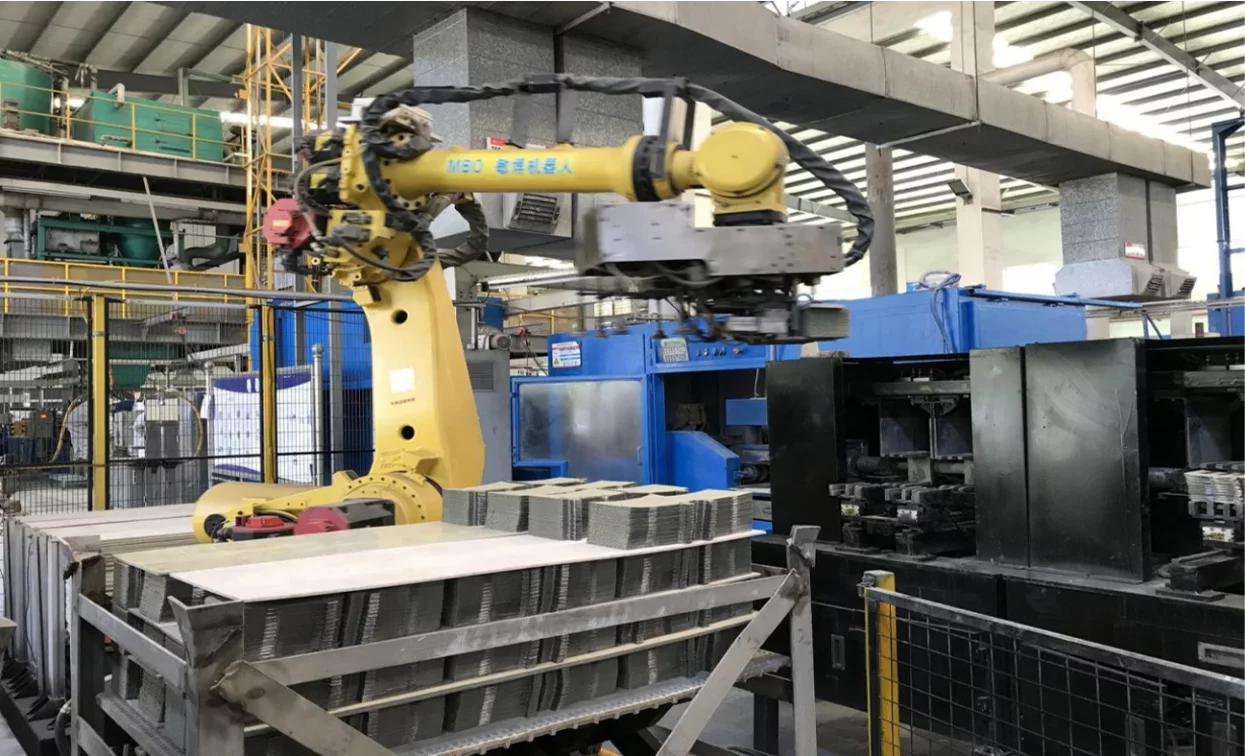
Founded in 1996, Aokly integrates battery R&D, manufacturing, and sales, supported by over 30 automated production lines and management certifications including ISO 9001, IATF 16949, ISO 14001, and ISO 45001.
Our AGM start-stop batteries are designed for modern start-stop vehicles, premium passenger cars, SUVs, and compatible hybrid applications. Their performance advantages include:
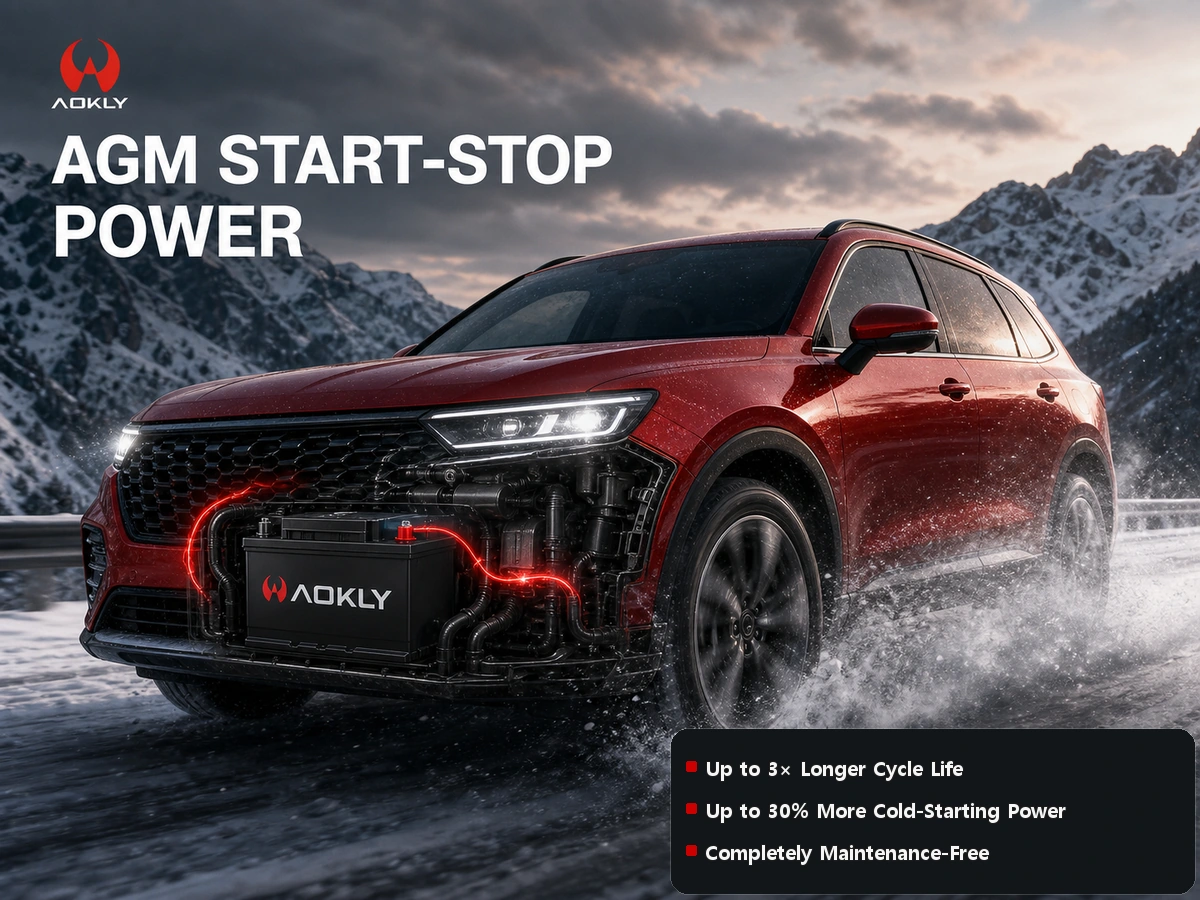
- Up to 3× cycle life: Compared with conventional maintenance-free batteries, supporting frequent engine restarts and repeated cycling.
- Up to 30% more cold-starting power: Compared with conventional batteries under standard tests, supporting engine starting in cold conditions.
- Excellent charge acceptance: Supports rapid energy recovery after restarts and during regenerative braking.
- Maintenance-free and leak-resistant: Sealed AGM construction eliminates water refilling and minimizes electrolyte leakage.
Some Aokly AGM Battery Specifications
| Model | Capacity (Ah) | CCA (A) | Dimensions (L×W×H, mm) |
| H5-60AGM | 60 | 660 | 242×174×190 |
| H6-70AGM | 70 | 780 | 278×176×190 |
| H7-80AGM | 80 | 880 | 316×176×190 |
| H8-92AGM | 92 | 980 | 355×174×190 |
| H9-105AGM | 105 | 950 | 394×174×190 |
Serving customers in over 150 countries, Aokly offers flexible OEM, ODM, and OBM cooperation models to meet the diverse needs of distributors and brand partners worldwide. For wholesalers and private-label customers, Aokly can assist with model recommendations based on the target market, vehicle specifications, and order requirements.
Buyers can also request product specifications, MOQ and lead-time information, packaging options, shipping support, and available certification or test documents before qualification.
To develop an AGM start-stop battery range for a regional aftermarket, you are more than welcome to contact Aokly with the target country, required sizes, estimated annual volume, and fitment priorities.
FAQs About EFB and AGM Batteries
1. Can You Replace an EFB Battery With an AGM Battery?
In some vehicles, yes. An AGM battery may replace an EFB battery if the vehicle manufacturer permits the upgrade and the replacement meets the required capacity, dimensions, terminal layout, and charging-system requirements. BMS configuration or battery registration may also be necessary.
2. Can You Replace an AGM Battery With an EFB Battery?
Generally, no. An EFB battery should not replace an AGM battery when the vehicle specifies AGM. EFB may not meet the original requirements for cycling, charge acceptance, and energy management and may cause premature failure or start-stop system problems. Follow the vehicle manufacturer’s replacement specifications.
3. Is AGM or EFB Battery Better?
The answer depends on the application. AGM generally suits vehicles with more demanding start-stop operation, regenerative braking, and higher electrical loads. EFB is appropriate for compatible vehicles with less demanding requirements and can offer a lower purchase cost. Always prioritize vehicle compatibility over a general performance ranking.
4. Which Battery Is Better for Wholesale Distribution?
Most broad aftermarket distributors benefit from carrying both. EFB can serve price-sensitive, high-volume basic start-stop applications, while AGM covers premium and technically demanding vehicles that cannot be downgraded. The right balance depends on regional vehicle parc data, channel positioning, climate, warranty experience, and stock turnover. If you need dedicated advice on batteries, feel free to contact Aokly’s professional team.