

Heavy industrial equipment requires power sources engineered for continuous deep discharge rather than brief high-current bursts. Forklifts, pallet jacks, floor scrubbers, and aerial work platforms all depend on batteries that deliver sustained energy over extended shifts. At Aokly, we frequently encounter confusion between these deep-cycle requirements and the characteristics of an ordinary automotive starting battery. Recognizing the fundamental differences helps operators select appropriate power for material handling applications while avoiding premature failures that disrupt warehouse operations.
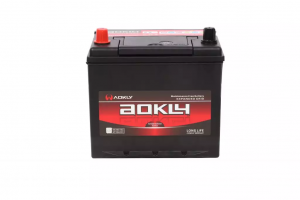
Plate Thickness and Structural Design
The internal construction of a true traction battery prioritizes durability over instantaneous power delivery. Deep-cycle plates use thicker grids with denser active material compared to the spongy, high-surface-area plates found in an automotive starting battery. This robust construction resists the physical stresses associated with repeated deep discharging. When equipment operators mistakenly install an automotive starting battery in a floor scrubber, the thin plates quickly shed active material as the battery cycles below fifty percent charge. Within months, capacity diminishes until the unit fails completely. Proper traction batteries maintain structural integrity through thousands of deep cycles because manufacturers design every component specifically for that duty cycle.
Cycling Capability and Discharge Patterns
Understanding discharge patterns clarifies why standard cranking batteries cannot support industrial workloads. An automotive starting battery delivers enormous current for seconds to start an engine, then immediately receives a recharge from the alternator. It rarely discharges below a ninety percent state of charge. Conversely, industrial electric vehicles routinely discharge traction batteries to eighty percent depth or more before opportunity charging occurs. This fundamental difference means that placing an automotive starting battery into traction service guarantees accelerated grid corrosion and active material softening. The chemistry may appear identical, but the engineering intent differs completely. Quality traction batteries accept deep discharge repeatedly because manufacturers formulate the paste and select grid alloys specifically for that punishment.
Active Material Composition and Density
Beyond plate geometry, the actual chemical composition varies significantly between battery types. Traction batteries utilize denser active material pastes that bond more firmly to grid structures. This density reduces the surface area available for instantaneous chemical reactions but increases the total energy available over extended discharge periods. An automotive starting battery prioritizes maximum surface area for instant response, trading away long-term cycle life for cold cranking amps. When evaluating options for heavy loads, examining the specific gravity and paste formulation provides insight into expected durability. The most demanding traction applications often specify tubular plate construction, which encases active material in gauntlets to prevent shedding during vibration and deep cycling.
Charge Acceptance and Recharge Profiles
Charging characteristics also distinguish these battery families in practical operation. Traction batteries require specific recharge algorithms that accommodate their thicker plates and denser active material. Standard automotive charging systems risk undercharging traction batteries, leading to sulfation over time. Conversely, attempting to fast-charge an automotive starting battery in an industrial setting generates excessive heat that warps plates and accelerates failure. Proper industrial chargers match voltage setpoints and absorption times to the traction battery’s requirements, ensuring complete recharge without gassing excessively.
Economic Considerations for Fleet Operations
From a financial perspective, matching battery type to application delivers measurable returns. Although a true traction battery costs more initially than an equivalent automotive starting battery, the service life differential makes the investment obvious. Facilities cycling batteries daily may replace misapplied automotive starting batteries several times before a proper traction battery reaches end of life. Labor costs for changeouts, equipment downtime during replacements, and disposal fees all multiply when using incorrect technology.
Heavy industrial loads demand power sources engineered specifically for deep discharge service. The construction differences between traction batteries and standard cranking types affect every aspect of performance and longevity. At Aokly, we encourage operators to verify battery specifications against equipment requirements, ensuring that investments in electrified material handling deliver full return through reliable daily operation.
