

At Aokly, we frequently encounter questions about the regulatory landscape governing energy storage solutions. It is essential for businesses and individuals using these power sources to understand the frameworks that ensure safety and performance. The guidelines for stationary and motive power applications are not arbitrary; they are developed from extensive research and real-world data to prevent hazards and ensure interoperability. Compliance with these rules is not merely a legal formality but a fundamental aspect of responsible usage and system design. We will explore the critical standards that define the safe deployment of these technologies, focusing on the technical rationale behind them.
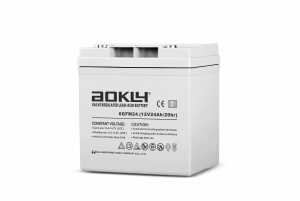
Why do VRLA AGM Batteries Require Strict Oversight?
The chemical and electrical nature of VRLA AGM batteries necessitates specific handling and design protocols to mitigate risks such as thermal runaway or gas venting. Internationally, the International Electrotechnical Commission (IEC) provides benchmarks like IEC 60896-2, which outlines the specific requirements for stationary valve-regulated types. This standard dictates parameters for safety, including resistance to internal short circuits and the durability of the containers. By adhering to these benchmarks, manufacturers ensure that every unit delivers consistent and predictable performance. For users, selecting VRLA AGM batteries that meet these criteria guarantees a higher degree of reliability in critical applications like telecommunications or uninterruptible power supplies. The testing procedures simulate years of operation to validate the integrity of the internal recombination technology.
What are the Key International Safety Benchmarks?
Beyond manufacturing standards, installation and operational safety are governed by distinct codes, such as those published by Underwriters Laboratories (UL). In many regions, compliance with UL 1989 is a prerequisite for battery installations, as it evaluates the product’s resistance to fire and electrical shock. These evaluations examine the battery’s construction, including the flame-retardant properties of the casing material. When we specify VRLA AGM batteries for a project, we must ensure that the entire setup adheres to local electrical codes, which often reference these UL standards. This regulatory harmony ensures that regardless of where the unit is manufactured, it meets a globally recognized safety threshold. The goal is to create a unified framework that protects both property and personnel from electrical faults.
How do Transportation Regulations Affect Supply Chains?
The movement of these energy storage units across borders is another area heavily governed by strict rules. Organizations like the International Air Transport Association (IATA) and the International Maritime Organization (IMO) classify them under specific dangerous goods regulations due to their electrolyte and potential energy. Shippers must certify that the products pass tests like the UN 38.3, which subjects them to simulated altitude, temperature, vibration, and impact conditions. This rigorous process ensures that VRLA AGM batteries can withstand the rigors of transit without leaking or catching fire. For a company like ours, maintaining a seamless supply chain requires constant vigilance to ensure all documentation and packaging meet these evolving transport criteria. Failure to comply can lead to significant delays and legal penalties, disrupting projects for our clients.
In conclusion, the landscape of rules for these power sources is designed to foster safety from the factory floor to the end-user. By strictly following the established manufacturing, installation, and transportation protocols, we mitigate risks and ensure operational excellence. At Aokly, our commitment to compliance means we prioritize these standards in every product we handle, ensuring our clients receive only the most reliable and certified solutions for their energy needs.
