

For businesses and data centers that rely on uninterrupted power, the battery bank is the silent workhorse of the entire system. We at Aokly understand that power failures are unpredictable, but battery failure doesn’t have to be. A well-maintained uninterruptible power supply (UPS) is only as reliable as its batteries. Specifically, the vrla UPS battery (Valve-Regulated Lead-Acid) is the most common type used in these setups due to its maintenance-free nature. However, “maintenance-free” does not mean “eternal.” Recognizing the early warning signs of failure can save you from costly downtime and equipment damage. Below, we break down the five critical indicators that it is time to start shopping for a replacement vrla UPS battery.
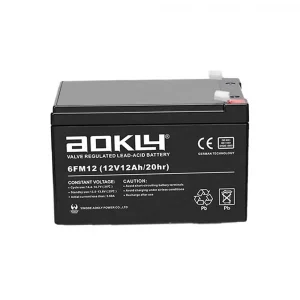
Physical Deformation and Leakage
One of the most unmistakable signs that your battery is failing is a visible change in its physical structure. If you perform a routine visual inspection and notice that the rectangular casing appears swollen, bulging, or bloated, this is a clear red flag. This swelling is often caused by a buildup of internal pressure or excessive heat, which degrades the internal plates. Similarly, any sign of corrosion or crystalline substance around the terminals indicates leakage of the electrolyte. A leaking or bulging vrla UPS battery is not only incapable of holding a proper charge but can also pose a safety risk to nearby equipment. If you see this, you must schedule a replacement immediately, as the structural integrity of the unit is compromised.
Significantly Reduced Runtime
The primary job of a UPS is to keep systems running until generators kick in or a safe shutdown occurs. Over time, the chemical compounds inside the battery degrade, leading to sulfation on the plates. This reduces the overall capacity. If you notice that your systems are shutting down after only five minutes when they used to run for twenty, your battery is exhausted. We recommend conducting a timed load test annually. If the runtime falls below eighty percent of the original specification, the vrla UPS battery is nearing the end of its useful life and will soon fail to provide the backup duration your operations require.
Frequent Over-Temperature Alarms
Heat is the enemy of all lead-acid batteries. While a slight rise in temperature during charging is normal, consistent overheating is a symptom of internal failure. If your UPS management interface reports frequent over-temperature warnings, or if the battery case feels hot to the touch during float charge, the internal resistance has likely risen dramatically. This not only makes the battery inefficient but also accelerates the aging process of any neighboring units in the string. A consistently hot battery will eventually suffer from thermal runaway, a dangerous condition that can lead to fire. Monitoring temperature is essential for protecting your investment in a vrla UPS battery.
The Age of the Battery
Even if a battery appears to be working perfectly and passes a basic voltage test, age alone is a valid reason for replacement. The chemical degradation inside a vrla UPS battery is inevitable. Most manufacturers, including those we partner with at Aokly, rate the typical service life of a standard VRLA battery between three to five years, depending on ambient temperature. If your battery is approaching or has passed the five-year mark, it is operating on borrowed time. We advise proactive replacement based on the installation date, rather than waiting for a failure. It is far better to replace an aging unit during planned maintenance than during a critical power outage.
Frequent Self-Test Failures
Modern UPS systems often run automatic periodic self-tests to verify battery health. If your system begins reporting “failed battery test” or “battery needs replacement” warnings with increasing frequency, listen to it. These tests measure the ability of the battery to accept and hold a charge. Ignoring these software warnings is a gamble. A string of vrla UPS battery units is only as strong as its weakest cell; if one unit fails a test, it drags down the performance of the entire bank.
In conclusion, keeping a close eye on these five factors—physical condition, runtime, temperature, age, and test results—is the best way to ensure power continuity. At Aokly, we emphasize that proactive monitoring is always cheaper than reactive repairs. By recognizing these signs early, you can ensure your systems remain protected and operational for the long haul.
