

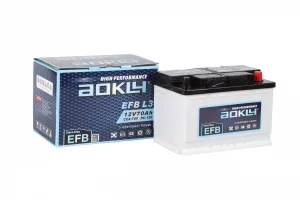
The performance of an electric trolling motor depends entirely on the quality of the power source feeding it. For anglers who spend long hours on the water, a dead battery means an abrupt end to the fishing day. Selecting the correct energy storage solution for these applications requires understanding the unique demands of marine environments. Starting a boat engine and slowly propelling a vessel through water place very different stresses on a battery. While some vehicle starting applications utilize an EFB enhanced flooded battery for its improved cycle resistance, trolling motors require a different chemistry altogether. We at Aokly recognize that matching the battery type to the specific use case is essential for reliability and longevity on the water.
Understanding Deep Cycle Requirements
Electric trolling motors draw a steady current over extended periods, often for hours at a time. This is fundamentally different from starting an engine, which requires a short, high burst of power. Batteries designed for this application must be true deep cycle units, capable of being discharged significantly without damage. Standard starting batteries, and even some dual-purpose marine batteries, will fail prematurely under this constant load. An EFB enhanced flooded battery represents an improvement over basic flooded technology, offering better cycle life for vehicles with start-stop systems. However, for the sustained, repetitive discharge cycles required by a trolling motor, absorbed glass mat (AGM) technology provides superior performance. The internal construction of AGM batteries allows for deeper discharges and faster recharge times, making them the preferred choice for powering electric propulsion.
Resistance to Vibration and Shock
The marine environment is inherently harsh. Boats constantly encounter waves, wakes, and the general vibration of the outboard motor. This physical stress can destroy a battery from the inside out. Traditional flooded lead-acid batteries contain liquid electrolyte that sloshes around, potentially damaging the internal plates. AGM batteries, by contrast, use glass mat separators to hold the electrolyte in place, making them completely spill-proof and highly resistant to vibration. This construction ensures that the internal components remain intact even when the boat bounces across choppy water. While an EFB enhanced flooded battery offers some resistance to vibration compared to standard automotive batteries, it still contains free-flowing liquid. For the constant pounding experienced in a fishing boat, the robust, immobilized design of AGM provides a significant durability advantage.
Maintenance-Free Operation
Convenience is a major factor for most recreational boaters. Few anglers want to spend their limited free time checking fluid levels and cleaning corrosive residue from terminals. AGM batteries are sealed and require absolutely no maintenance over their service life. They can be mounted in various orientations without risk of acid leakage, and they do not off-gas during normal operation, which protects onboard electronics from corrosive fumes. This sealed construction is particularly valuable on smaller boats where battery compartments may be tight and ventilation is limited. In contrast, an EFB enhanced flooded battery, while more robust than a standard wet cell, still requires periodic maintenance and proper ventilation to manage gas release during charging. The set-it-and-forget-it nature of AGM technology appeals strongly to those who value time on the water over time in the garage.
Compatibility with Modern Charging Systems
Modern trolling motors and onboard chargers are increasingly sophisticated. Many anglers utilize multi-bank chargers that remain connected to the batteries whenever the boat is docked. AGM batteries accept charging currents very efficiently and have a low self-discharge rate, meaning they hold their charge longer during periods of storage. They also pair well with lithium-compatible chargers and modern power management systems. Furthermore, the low internal resistance of AGM allows for faster recharge times, getting you back on the water sooner after a day of heavy use.
To conclude, selecting the right power source for an electric trolling motor directly impacts fishing success and overall enjoyment. While various battery technologies exist for different automotive applications, the unique demands of marine propulsion favor the durability and convenience of AGM construction. At Aokly, we emphasize that understanding the specific energy requirements of your equipment leads to better performance and longer service life.
